Back to WATER INSIGHTS

By Rita Evelyne Joshua, Publishing Associate: Researcher and Writer at Save the Water™ | July 27, 2025
Edited by Joshua Awolaye, Publishing Associate: Editor at Save the Water™
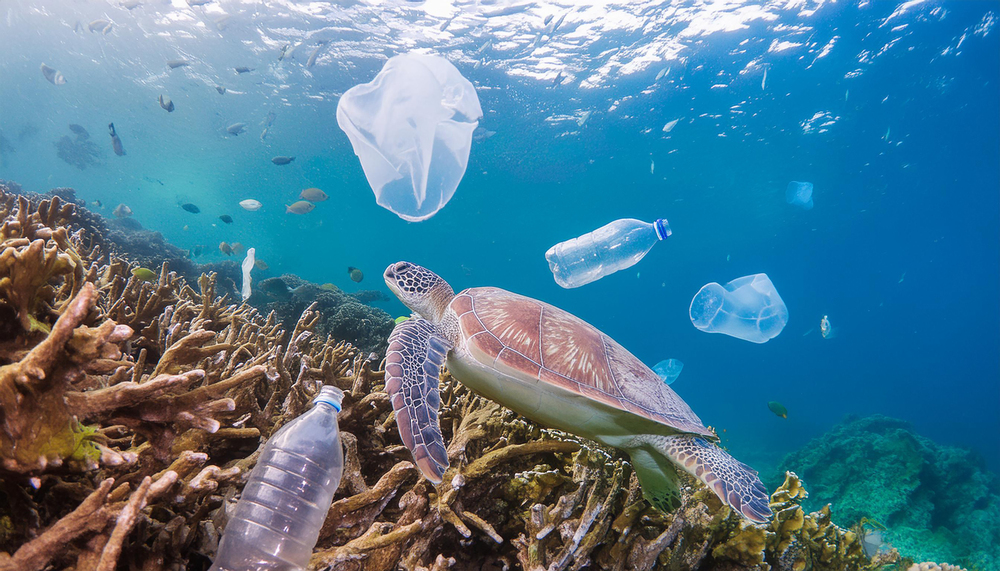
The Great Pacific Garbage Patch (GPGP) is an island of plastic waste floating between Hawaii and California in the Pacific Ocean. This massive accumulation spans approximately 1.6 million square kilometers—three times the size of France. This patch contains about 3.6 trillion pieces of plastic. Cleaning it up remains an enormous challenge and requires ongoing attention. Thus, several companies have invested in cleaning up this garbage patch.
The GPGP sits precisely between Japan and the west coast of North America. The North Pacific gyre (a large system of swirling ocean currents) occupies this spot on the western coast. At this spot, winds from different areas create a vortex that generates circular motion.
Additionally, this area also brings together warm water from the South Pacific and cool water from the Arctic. The plastic waste enters the ocean, and the vortex traps it in the gyres to form mobile plastic waste patches. These waste islands move constantly, unlike the waste people dump in landfills. They keep moving, depending on the strength of the ocean currents.
Three primary sources contribute to the composition of this floating mass of debris:
| Ocean Darkening | Microplastics in the garbage patch block sunlight from reaching deeper into the ocean. This blocking creates a darkening effect in the water. The lack of sunlight affects the growth of algae and phytoplankton. |
| Macro-plastics and ghost fishing | Fish can get trapped in abandoned ghost nets or plastic debris. Ghost nets make up 46% of the GPGP and restrict the swimming paths of marine animals. Also, many sea creatures are unable to escape these nets and die as a result. |
| Food chain | Plastics floating in the garbage patch contain toxic compounds called persistent bio-accumulative compounds. When ingested by marine animals, these toxic chemicals eventually build up by bioaccumulation and biomagnification in fatty tissues and mammalian milk. Furthermore, scientists also find them as polyps in coral reefs. When ingested by humans, this contamination affects the neurological, and reproduction system. |
| Ocean cycle balance | The garbage patch disrupts important ocean cycles like the carbon cycle and oxygen cycle. The plastic waste causes a decline in the oxygen levels in the water. Additionally, it also interferes with bio-geochemical cycles that keep the ocean healthy. This also causes changes in the behavior, reproduction, and metabolism of the sea animals. |
Scientists face challenges when cleaning the GPGP because the garbage patch keeps moving. Also, the pollutant concentrations change depending on ocean currents. The Ocean Cleanup organization leads the cleaning of the patch. They estimate it will cost $7.5 billion to clean up the plastics within a decade.
The Ocean Cleanup project reports impressive progress so far. They have cleared 1 million pounds of plastic in the last three years, which represents 0.5% of the total garbage patch. While this seems small, it proves their system works and gives hope for future cleanup efforts.
Single-use plastic is one of the major pollutants that people dump into the ocean. Scientists predict that humans will dump almost 90 million metric tons of plastic by the end of 2030. Therefore, we must take careful steps to reduce plastic usage immediately:






Save the Water™ is a 501 (c)(3) non-profit organization with a mission to conduct research to identify and remove harmful contaminants in water and to raise public awareness about water contamination and its health impacts.